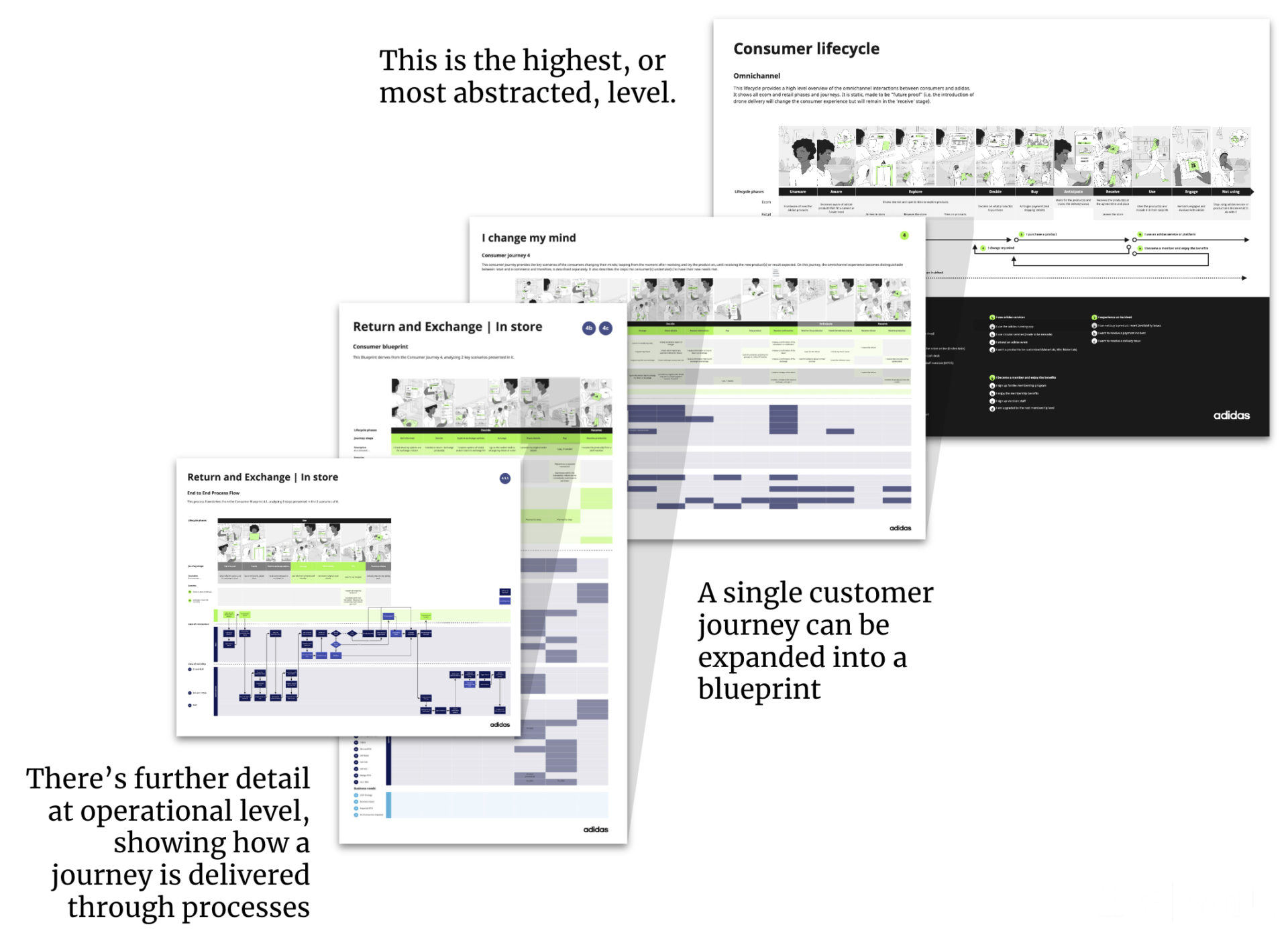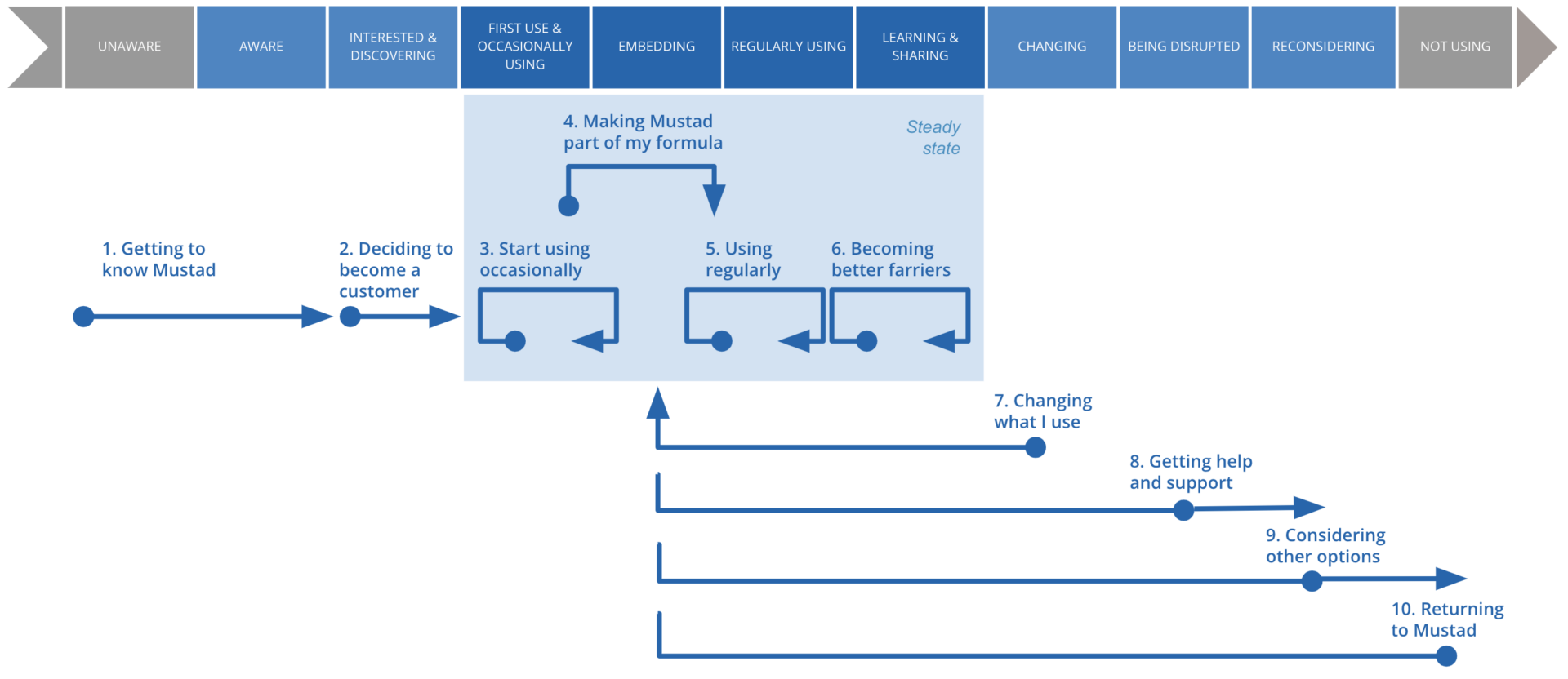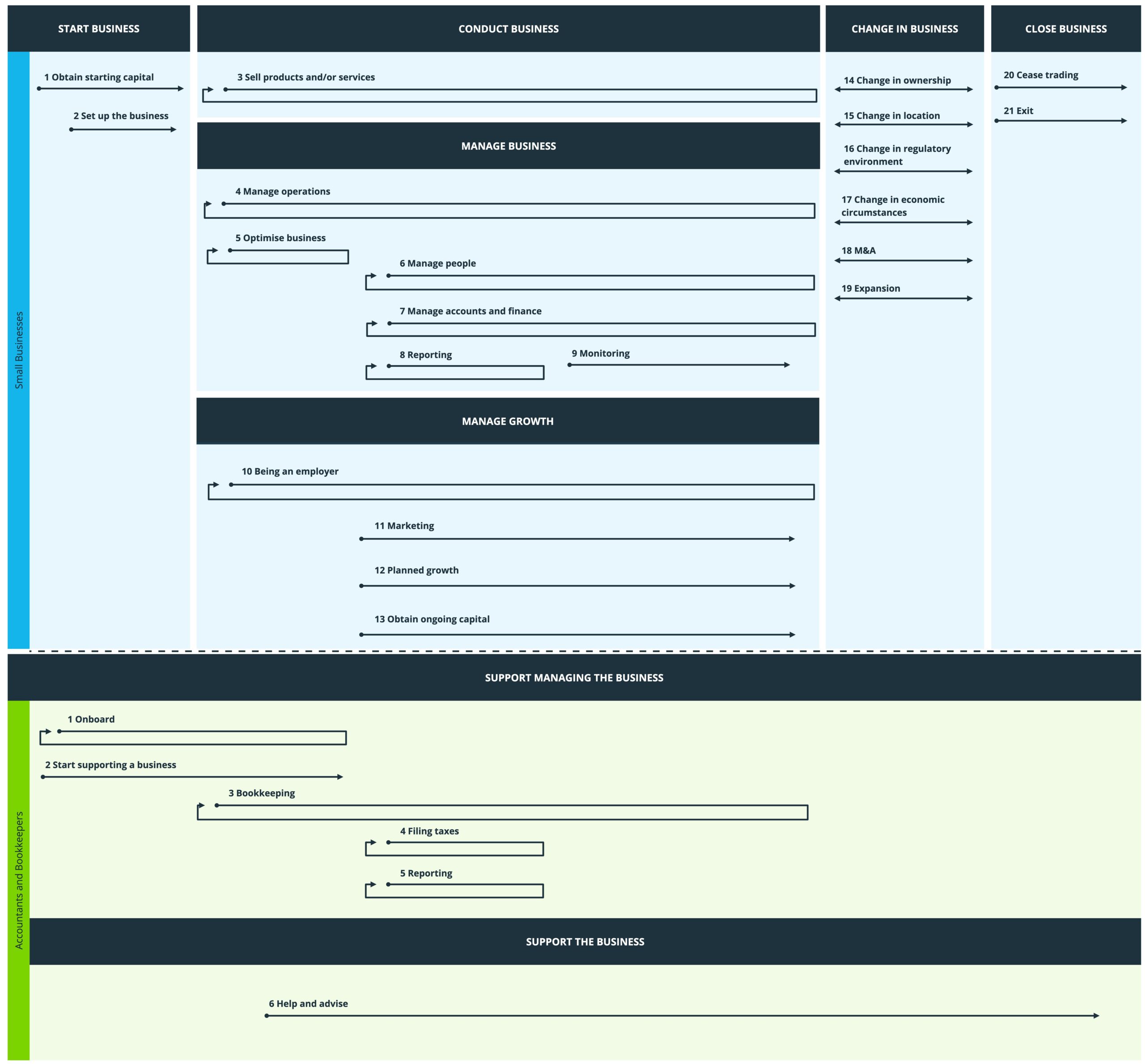
A Service Architecture is made up of nested journeys, and processes oriented across a customer lifecycle. Organisations typically have just one. Occasionally there’s a separate one for the employee lifecycle, but that’s another article.
This framework enables an “outside-in” view of the business, with a common language and approach to label, discuss, share, report on, and therefore improve the customer experience across an organisation. It helps to drive customer-centric understanding and culture by moving away from product, process, system, departmental, channel thinking, towards a customer’s point of view when discussing business performance and value creation.
At a high level, nothing is left out and nothing overlaps. On one page (maybe a big page) you can see everything your organisation does for customers. At the lower levels, the overlapping parts are the most interesting. It can show whether the same broken process is wreaking havoc across the experience, or whether it’s an isolated issue. Line up your technical architecture to your services and you’ll find out that you have five different systems doing the same thing. Not great, but at least now you know.
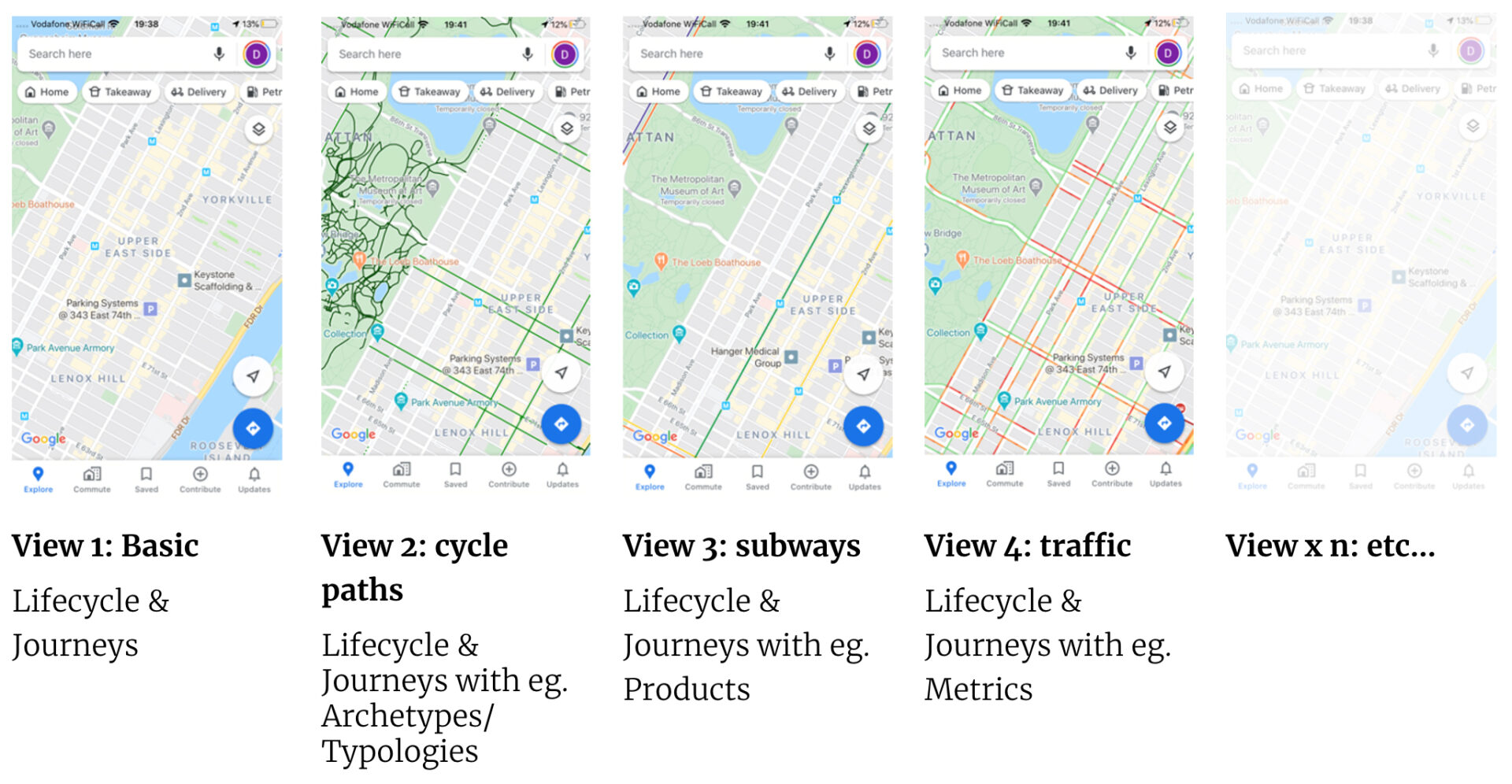
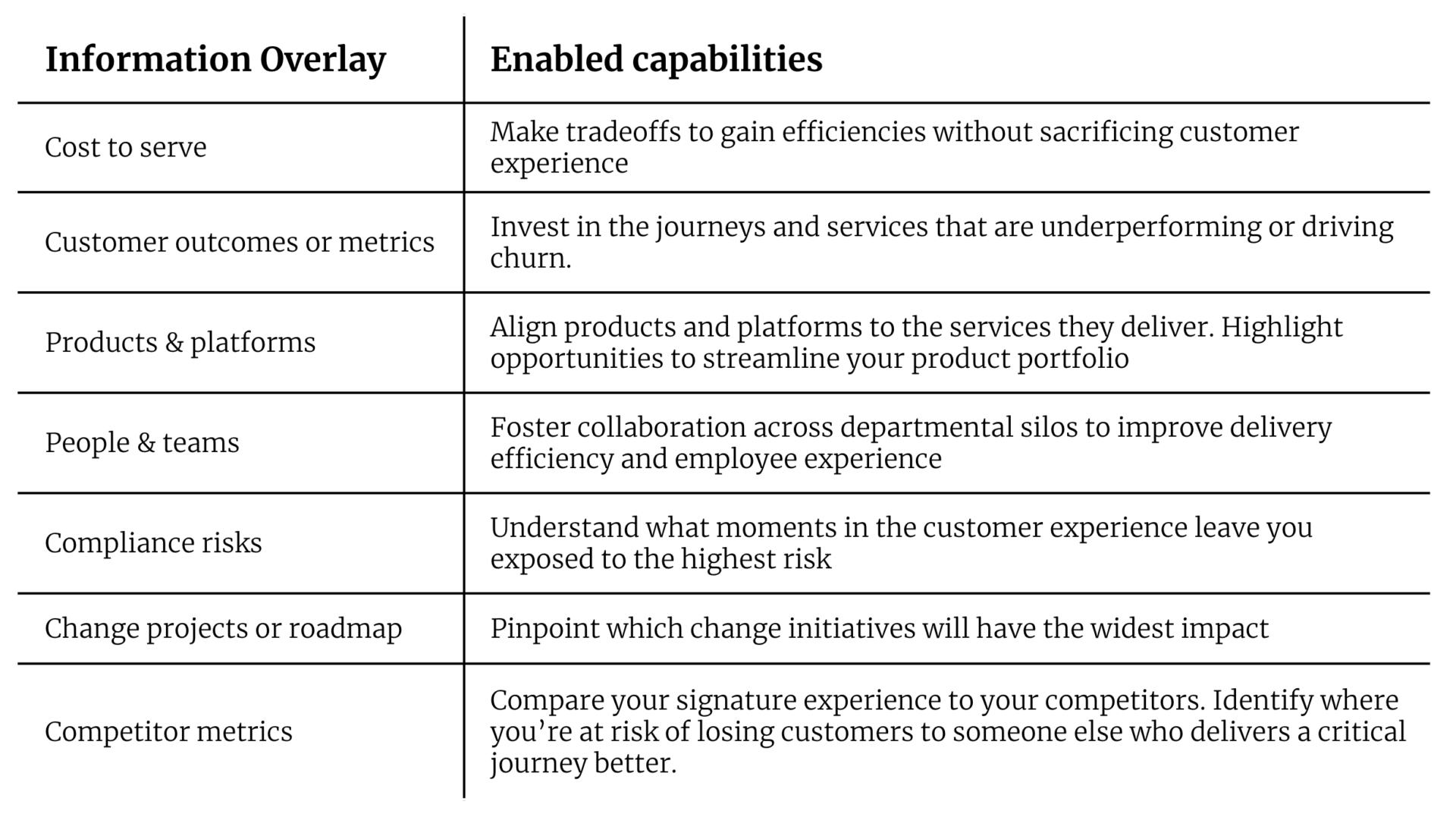
The beauty of creating a Service Architecture is that once you have established it, you can then use it to look at your business through different lenses. It may be that you want to see where the main cost centres are and how they align with revenue, or you may want to see how all of your IT systems underpin and support each of the services you provide. You can apply each of these different lenses as an overlay onto the basic framework of the Service Architecture.
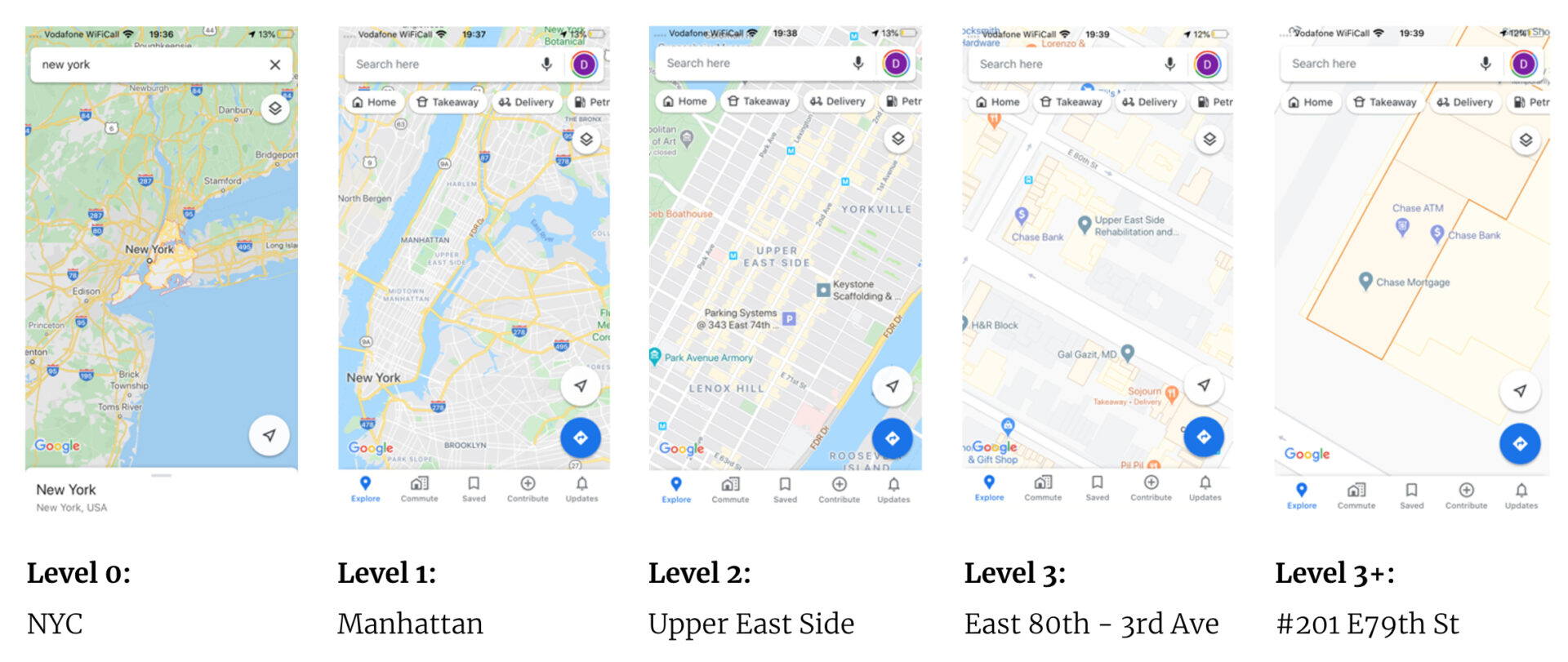
Think of these different lenses or overlays like layers in Google Maps. In the illustration below, if we take the Manhattan grid and how that sits within the context of New York as a metaphor for Service Architecture, you can then see that once you have the foundation, you can then start to apply a number of different layers to it. You can zoom in and out to get different altitudes and apply different filters to find what you need.